


n. [ NL. baccalaureatus, fr. LL. baccalaureus a bachelor of arts, fr. baccalarius, but as if fr. L. bacca lauri bayberry, from the practice of the bachelor's wearing a garland of bayberries. See Bachelor. ]
a. Pertaining to a bachelor of arts. [ 1913 Webster ]
Baccalaureate sermon,
n. a West Indian tree (Calophyllum calaba) having racemes of fragrant white flowers and yielding a durable timber and resinous juice.
n. A district on the west coast of Africa. [ 1913 Webster ]
Calabar bean,
n. (Chem.) An alkaloid resembling physostigmine and occurring with it in the calabar bean. [ 1913 Webster ]
n. [ Sp. calabaza, or Pg. calabaça, cabaça (cf. F. Calebasse), lit., a dry gourd, fr. Ar. qar', fem., a kind of gourd + aibas dry. ]
Calabash tree. (Bot.),
n. [ A corruption of Sp. calabozo dungeon. ] A prison; a jail. [ Local, U. S. ] [ 1913 Webster ]
‖n. [ Sp. ] A jail. See Calaboose. [ Webster 1913 Suppl. ]
n. a fast-growing tropical American evergreen (Muntingia calabura) having white flowers and white fleshy edible fruit; bark yields a silky fiber used in cordage and wood is valuable for staves.
‖n. [ F. ] A slope or declivity in a manege ground down which a horse is made to gallop, to give suppleness to his haunches. [ 1913 Webster ]
n. any of various orchids of the genus
‖n. [ NL. ] A genus of aroideous plants, of which some species are cultivated for their immense leaves (which are often curiously blotched with white and red), and others (in Polynesia) for food. [ 1913 Webster ]
n. [ L. callaïs, Gr.
n. [ LL. calamancus, calamacus; cf. camelaucum; a head covering made of camel's hair, NGr.
A valuable furniture wood from India and Ceylon, of a hazel-brown color, with black stripes, very hard in texture. It is a species of ebony, and is obtained from the Diospyros quæsita. Called also
n. [ It. calamari, fr. LL. calamarium inkstand, fr. L. calamus a reed pen: cf. F. calmar, calemar, pen case, calamar. ] (Cookery) Squid, used as a food; -- from the Italian word. See Squid. [ PJC ]
n. [ F. calambac, calambour, from Malay Kalambaq a king of fragrant wood. ] (Bot.) A fragrant wood; agalloch. [ 1913 Webster ]
n. [ See Calambac. ] A species of agalloch, or aloes wood, of a dusky or mottled color, of a light, friable texture, and less fragrant than calambac; -- used by cabinetmakers. [ 1913 Webster ]
a. [ L. calamus reed + ferous. ] Producing reeds; reedy. [ 1913 Webster ]
n. [ F. calamine, LL. calamina, fr. L. Cadmia. See Cadmia. ] (min.) A mineral, the hydrous silicate of zinc. [ 1913 Webster ]
☞ The name was formerly applied to both the carbonate and silicate of zinc each of which is valuabic as an ore; but it is now usually restricted to the latter, the former being called smithsonite. [ 1913 Webster ]
n. [ OE. calamint, calemente (cf. F. calament) fr. L. calamintha, Gr.
n. [ L. calamus a reed. ] One who plays upon a reed or pipe. [ Obs. ] Blount. [ 1913 Webster ]
v. i. [ L. calamistratus, curled with the curling iron, fr. calamistrum curling iron, fr. calamus a reed. ] To curl or friz, as the hair. [ Obs. ] Cotgrave.
n. The act or process of curling the hair. [ Obs. ] Burton. [ 1913 Webster ]
‖n. [ L., a curling iron. ] (Zool.) A comblike structure on the metatarsus of the hind legs of certain spiders (
n. [ L. calamus a reed: cf. F. calamite. ] (Paleon.) A fossil plant of the coal formation, having the general form of plants of the modern
a. [ L. Calamitosus; cf. F. calamiteux. ] [ 1913 Webster ]
Ten thousands of calamitous persons. South. [ 1913 Webster ]
--
pos>n.;
The word calamity was first derived from calamus when the corn could not get out of the stalk. Bacon. [ 1913 Webster ]
Strokes of calamity that scathe and scorch the soul. W. Irving. [ 1913 Webster ]
The deliberations of calamity are rarely wise. Burke. [ 1913 Webster ]
Where'er I came I brought calamity. Tennyson.
n.;
‖a. [ It. ] (Mus.) Gradually diminishing in rapidity and loudness. [ 1913 Webster ]
n. a large genus of low-growing herbs; widespread throughout tropical and warm temperate regions having usually basal leaves and panicles of purplish ephemeral flowers.
n. any of various showy orchids of the genus
n. [ F. calèche; of Slavonic origin; cf. Bohem. kolesa, Russ. koliaska calash, koleso, kolo, wheel. ]
The baroness in a calash capable of holding herself, her two children, and her servants. W. Irving. [ 1913 Webster ]
A human skull reported, by
n. (Min.) A bronze-yellow massive mineral with metallic luster; a telluride of gold; -- first found in
n. a genus of moths whose larvae are cutworms: underwings.
‖n. [ It., fr. L. cicada. ] A cicada. See Cicada. “At eve a dry cicala sung.” Tennison. [ 1913 Webster ]
v. t. to reduce in intensity (a crisis or a war). [ WordNet 1.5 ]
n. a reduction in intensity (of a crisis or a war). [ WordNet 1.5 ]
a. Didascalic. [ R. ] [ 1913 Webster ]
n. [ F., Sp. escalada (cf. It. scalata), fr. Sp. escalar to scale, LL. scalare, fr. L. scala ladder. See Scale, v. t. ] (Mil.) A furious attack made by troops on a fortified place, in which ladders are used to pass a ditch or mount a rampart. [ 1913 Webster ]
Sin enters, not by escalade, but by cunning or treachery. Buckminster. [ 1913 Webster ]
v. t.
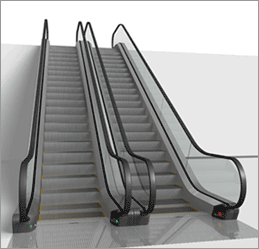
n. [ NL. Cf. Escalade. ] A stairway or incline arranged like an endless belt so that the steps or treads ascend or descend continuously, and one stepping upon it is carried up or down; -- originally a trade term, which has become the generic name for such devices. Such devices are in common use in large retail establishments such as department stores, and in public buildings having a heavy traffic of persons between adjacent floors. [ Webster 1913 Suppl. +PJC ]
a. Intercalary. [ 1913 Webster ]
a. [ L. intercalaris, intercalarius: cf. F. intercalaire. See Intercalate. ] [ 1913 Webster ]
This intercalary line . . . is made the last of a triplet. Beattie. [ 1913 Webster ]
Intercalary day (Med.),
v. t.
Beds of fresh-water shells . . . are intercalated and interstratified with the shale. Mantell. [ 1913 Webster ]
n. [ L. intercalatio: cf. F. intercalation. ] [ 1913 Webster ]
Intercalations of fresh-water species in some localities. Mantell. [ 1913 Webster ]
n. (Zool.) A kind of fresh-water bass; the crappie. [ Southern U.S. ] [ 1913 Webster ]
‖n.;
a. Capable of being scaled. [ 1913 Webster ]


'%3e%3cpath%20d='M13.7001%2011.6957H3.30006C3.08006%2011.6957%202.90006%2011.8733%202.90006%2012.0904V12.8799C2.90006%2013.097%203.08006%2013.2746%203.30006%2013.2746H13.7001C13.9201%2013.2746%2014.1001%2013.097%2014.1001%2012.8799V12.0904C14.1001%2011.8733%2013.9201%2011.6957%2013.7001%2011.6957ZM15.3001%203.80096C14.6376%203.80096%2014.1001%204.33139%2014.1001%204.98517C14.1001%205.16034%2014.1401%205.32317%2014.2101%205.47366L12.4001%206.54438C12.0151%206.77136%2011.5176%206.64307%2011.2951%206.2582L9.25756%202.74011C9.52506%202.523%209.70006%202.19734%209.70006%201.82728C9.70006%201.17349%209.16256%200.643066%208.50006%200.643066C7.83756%200.643066%207.30006%201.17349%207.30006%201.82728C7.30006%202.19734%207.47506%202.523%207.74256%202.74011L5.70506%206.2582C5.48256%206.64307%204.98256%206.77136%204.60006%206.54438L2.79256%205.47366C2.86006%205.32563%202.90256%205.16034%202.90256%204.98517C2.90256%204.33139%202.36506%203.80096%201.70256%203.80096C1.04006%203.80096%200.500061%204.33139%200.500061%204.98517C0.500061%205.63895%201.03756%206.16938%201.70006%206.16938C1.76506%206.16938%201.83006%206.15951%201.89256%206.14965L3.70006%2010.9062H13.3001L15.1076%206.14965C15.1701%206.15951%2015.2351%206.16938%2015.3001%206.16938C15.9626%206.16938%2016.5001%205.63895%2016.5001%204.98517C16.5001%204.33139%2015.9626%203.80096%2015.3001%203.80096Z'%20fill='%23FFE713'/%3e%3c/g%3e%3cdefs%3e%3cclipPath%20id='clip0_3472_3618'%3e%3crect%20width='16'%20height='12.6316'%20fill='white'%20transform='translate(0.500061%200.643066)'/%3e%3c/clipPath%3e%3c/defs%3e%3c/svg%3e)