
Chinese Characters: Make-Me-a-Hanzi Dictionary [with local updates] Make-Me-a-Hanzi Dictionary

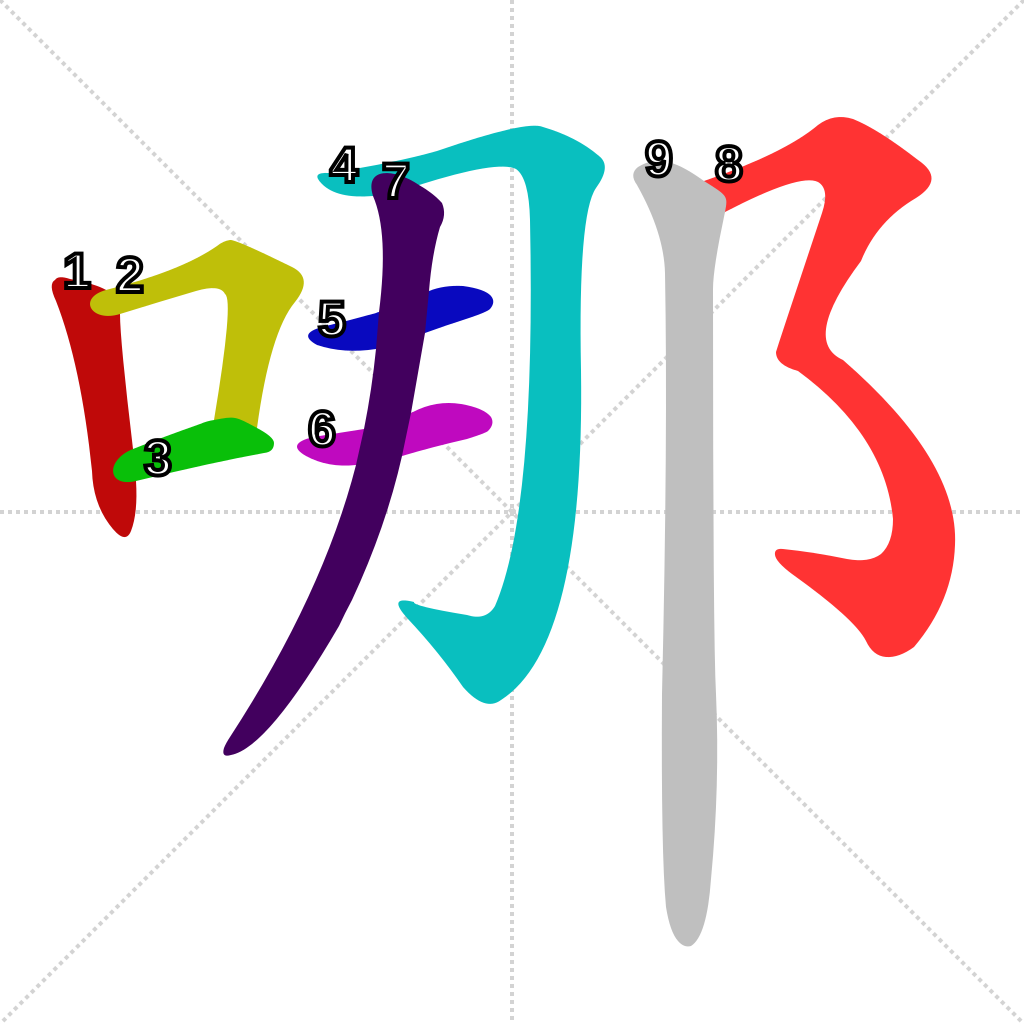


那
梛
Chinese-English: CC-CEDICT Dictionary CC-CEDICT CN-EN Dictionary
Japanese-English: EDICT Dictionary EDICT JP-EN Dictionary
[だんな, danna] (n) (1) master (of a house, shop, etc.); (2) husband (informal); (3) word used to address a male patron, customer, or person of high status (sir, boss, master, governor); (4) (See パトロン・1) patron of a mistress, geisha, bar or nightclub hostess; sugar daddy; (5) { Buddh } (original meaning; usu. written as 檀那) (See 檀越, 檀家) alms; almsgiving; almsgiver; (P) #18713
[キナひ, kina hi] (n) cinchona bark
[シナチベットごぞく(シナチベット語族);しなチベットごぞく(支那チベット語族), shinachibetto gozoku ( shinachibetto gozoku ); shina chibetto gozoku ( shina chibet] (n) Sino-Tibetan (family of languages)
[シナチベットしょご(シナチベット諸語);しなチベットしょご(支那チベット諸語), shinachibetto shogo ( shinachibetto shogo ); shina chibetto shogo ( shina chibetto ] (n) Sino-Tibetan languages
[ジャイナきょう(ジャイナ教);じゃいなきょう(耆那教);じなきょう(耆那教), jaina kyou ( jaina kyou ); jainakyou ( ki na kyou ); jinakyou ( ki na kyou )] (n) Jainism
[いざなぎのみこと;いざなきのみこと, izanaginomikoto ; izanakinomikoto] (n) (See 伊弉冉尊) Izanagi; male deity who fathered Japan and the sun, moon, and storm gods
[いざなみのみこと, izanaminomikoto] (n) (See 伊弉諾尊) Izanami; female deity who gave birth to Japan and the sun, moon, and storm gods
[いな;いの, ina ; ino] (n) { Buddh } (See 六知事) one of the six administrators of a Zen temple (in charge of general affairs)
[いっせつな, issetsuna] (n-t) (a) moment; an instant
[インドシナ, indoshina] (n) (uk) Indochina; (P)
[キナ, kina] (n) (uk) cinchona (dut
[キナチンキ, kinachinki] (n) (uk) tincture of cinchona
[きんなら, kinnara] (n) { Buddh } kimnara (celestial musicians and protectors of Buddhism)
[しな, shina] (n) China (now regarded as derogatory)
[しなそば, shinasoba] (n) (sens) Chinese soba; ramen
[しなご, shinago] (n) (arch) (See 中国語) Chinese language
[しなじへん, shinajihen] (n) (sens) Second Sino-Japanese War (1937-1945)
[しなみざくら, shinamizakura] (n) Prunus pseudo-cerasus
[しなじん, shinajin] (n) (sens) Chinese person
[しなちく, shinachiku] (n) (sens) (See 麺媽) bamboo shoots boiled, sliced, fermented, dried or preserved in salt, then soaked in hot water and sea salt
[しなりょうり, shinaryouri] (n) (sens) Chinese food
[しなれんぎょう;シナレンギョウ, shinarengyou ; shinarengyou] (n) (uk) Chinese golden bells; Forsythia Vahl
[しきしゃまな, shikishamana] (n) probationary nun (undergoing a two-year probationary period before receiving ordainment) (san
[しゃな, shana] (n) Mahavairocana (name of a Bodhisattva)
[わかだんな, wakadanna] (n) (hon) young master; young gentleman
[ぜんな, zenna] (n) { Buddh } dhyana (profound meditation)
[おおだんな, oodanna] (n) master; head of household; man of the house; principal supporter of a temple
[だいびるしゃなきょうじょうぶつしんぺんかじきょう, daibirushanakyoujoubutsushinpenkajikyou] (n) (obsc) Mahavairocana Sutra
[だんなげい, dannagei] (n) dilettantism; amateurism
[だんなどり, dannadori] (vs) (1) (See 妾奉公) to become a mistress; to serve as a concubine; (2) (See 主人に仕える) to serve one's master
[だんなしゅう, dannashuu] (n) gents; gentlemen
[だんなでら, dannadera] (n) temple to which a family belongs
[なかしな, nakashina] (n) Central China
[なへん, nahen] (pn, adj-no) where
[なべか;ナベカ, nabeka ; nabeka] (n) (uk) Omobranchus elegans (species of combtooth blenny)
[なゆた, nayuta] (n) (1) { Buddh } an extremely great number (often said to be 100 million) (san
[みなみしなかい, minamishinakai] (n) South China Sea
[びるしゃな, birushana] (n) { Buddh } Vairocana (Buddha who symbolizes the entirety of the phenomenological world)
[びるしゃなぶつ, birushanabutsu] (n) Vairocana-Buddha
[まかびるしゃな, makabirushana] (n) { Buddh } Mahavairocana (Buddha who symbolizes the entirety of the phenomenological world)
[まな, mana] (n) { Buddh } (See 末那識) manas (defiled mental consciousness, which gives rise to the perception of self)
[まなしき, manashiki] (n) { Buddh } manas-vijnana (defiled mental consciousness, which gives rise to the perception of self)
[よなぐにさん;ヨナグニサン, yonagunisan ; yonagunisan] (n) (uk) atlas moth (Attacus atlas)
[せつな, setsuna] (n-adv, n-t) moment; instant; juncture
[せつなしゅぎ, setsunashugi] (n) principle of living only for the moment
[せつなてき, setsunateki] (adj-na) ephemeral; transitory
[るしゃなぶつ, rushanabutsu] (n) (obsc) (See 毘盧遮那仏) Vairocana-Buddha
เพิ่มคำศัพท์

ทราบความหมายของคำศัพท์นี้? กด [เพิ่มคำศัพท์] เพื่อใส่คำนี้พร้อมความหมาย เพื่อเป็นวิทยาทานแก่ผู้ใช้ท่านอื่น ๆ
'%3e%3cpath%20d='M13.7001%2011.6957H3.30006C3.08006%2011.6957%202.90006%2011.8733%202.90006%2012.0904V12.8799C2.90006%2013.097%203.08006%2013.2746%203.30006%2013.2746H13.7001C13.9201%2013.2746%2014.1001%2013.097%2014.1001%2012.8799V12.0904C14.1001%2011.8733%2013.9201%2011.6957%2013.7001%2011.6957ZM15.3001%203.80096C14.6376%203.80096%2014.1001%204.33139%2014.1001%204.98517C14.1001%205.16034%2014.1401%205.32317%2014.2101%205.47366L12.4001%206.54438C12.0151%206.77136%2011.5176%206.64307%2011.2951%206.2582L9.25756%202.74011C9.52506%202.523%209.70006%202.19734%209.70006%201.82728C9.70006%201.17349%209.16256%200.643066%208.50006%200.643066C7.83756%200.643066%207.30006%201.17349%207.30006%201.82728C7.30006%202.19734%207.47506%202.523%207.74256%202.74011L5.70506%206.2582C5.48256%206.64307%204.98256%206.77136%204.60006%206.54438L2.79256%205.47366C2.86006%205.32563%202.90256%205.16034%202.90256%204.98517C2.90256%204.33139%202.36506%203.80096%201.70256%203.80096C1.04006%203.80096%200.500061%204.33139%200.500061%204.98517C0.500061%205.63895%201.03756%206.16938%201.70006%206.16938C1.76506%206.16938%201.83006%206.15951%201.89256%206.14965L3.70006%2010.9062H13.3001L15.1076%206.14965C15.1701%206.15951%2015.2351%206.16938%2015.3001%206.16938C15.9626%206.16938%2016.5001%205.63895%2016.5001%204.98517C16.5001%204.33139%2015.9626%203.80096%2015.3001%203.80096Z'%20fill='%23FFE713'/%3e%3c/g%3e%3cdefs%3e%3cclipPath%20id='clip0_3472_3618'%3e%3crect%20width='16'%20height='12.6316'%20fill='white'%20transform='translate(0.500061%200.643066)'/%3e%3c/clipPath%3e%3c/defs%3e%3c/svg%3e)