


Chinese Characters: Make-Me-a-Hanzi Dictionary [with local updates] Make-Me-a-Hanzi Dictionary


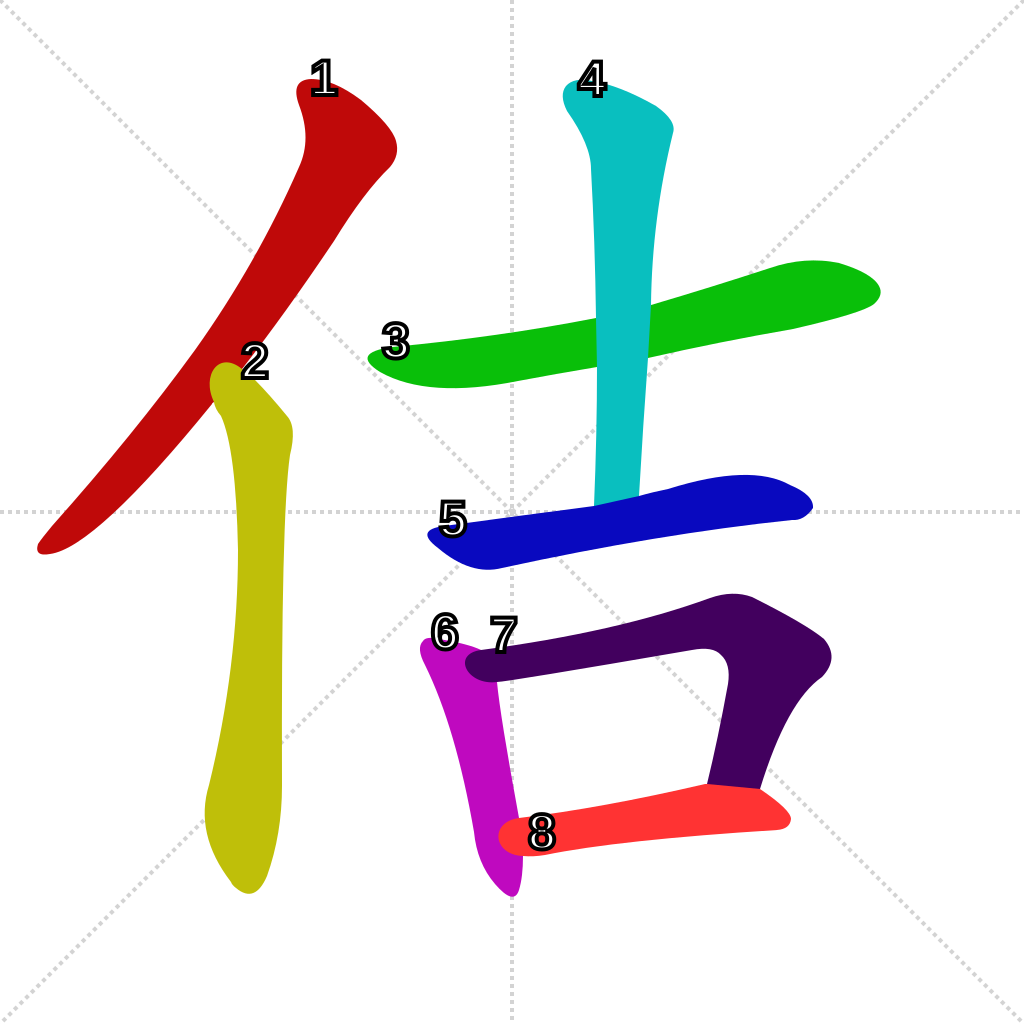


吉
結
詰
拮
髻
黠
咭
姞
秸
Chinese-English: CC-CEDICT Dictionary CC-CEDICT CN-EN Dictionary
[吉 首, Jí shǒu] Jishou city prefecture level city in west Hunan and capital of Xiangxi Tujia and Miao autonomous prefecture 湘西土家族苗族自治州, See Also: 湘西土家族苗族自治州 #61792
[吉 首 市, Jí shǒu shì] Jishou city prefecture level city in west Hunan and capital of Xiangxi Tujia and Miao autonomous prefecture 湘西土家族苗族自治州, See Also: 湘西土家族苗族自治州 #97257
Japanese-English: EDICT Dictionary EDICT JP-EN Dictionary
[きち;きつ, kichi ; kitsu] (n, adj-no) (See 御神籤・おみくじ) good fortune (esp. omikuji fortune-telling result); good luck; auspiciousness #2161
[よい(P);いい(P), yoi (P); ii (P)] (adj-i) (1) (uk) good; excellent; fine; nice; pleasant; agreeable; (2) sufficient (can be used to turn down an offer); ready; prepared; (3) profitable (e.g. deal, business offer, etc.); beneficial; (4) (See 構わない) OK; (P) #876
[だいきち, daikichi] (n) excellent luck #15242
[ゆきち;ユキチ, yukichi ; yukichi] (n) (sl) 10, 000 yen note #18107
[すえきち, suekichi] (n) (See 御神籤・おみくじ) good luck to come (omikuji fortune-telling result); future good luck #19248
[よしわらすずめ, yoshiwarasuzume] (n) (obsc) (See 葦切) reed warbler (esp. the great reed warbler, but also the black-browed reed warbler)
[イギリス, igirisu] (n, adj-no) (uk) Great Britain (por
[おうどうきちにち;こうどうきちにち, oudoukichinichi ; koudoukichinichi] (n) very auspicious day for all types of occasions
[かきつ, kakitsu] (n) Kakitsu era (1441.2.17-1444.2.5)
[きちじ;キチジ, kichiji ; kichiji] (n) (uk) broadbanded thornyhead; broadfin thornyhead; kichiji rockfish (Sebastolobus macrochir)
[よしぎゅう, yoshigyuu] (n) (abbr) (sl) Yoshinoya gyudon (beef on rice)
[きっきょう, kikkyou] (n) sunshine and shadow; fortune
[きっきょうかふく, kikkyoukafuku] (n) good and bad fortune, and weal and woe
[よしわらことば;よしはらことば, yoshiwarakotoba ; yoshiharakotoba] (n) (See ありんすことば) language used by the harlots of the Yoshiwara red light district during the Edo period
[きちじ;きつじ, kichiji ; kitsuji] (n) an auspicious event
[きっしょ, kissho] (n) (See 書き初め) first calligraphy of the year
[きっしょう;きちじょう, kisshou ; kichijou] (n) lucky omen; happy; auspicious
[きっしょうてん(P);きちじょうてん, kisshouten (P); kichijouten] (n) { Buddh } Sri-mahadevi (consort of Vaisravana in Buddhism, based on Lakshmi, the consort of Vishnu in Hinduism); (P)
[よしかわしんとう, yoshikawashintou] (n) Yoshikawa Shinto (Confucianist form of Shinto, stripped of Buddhist influence)
[きっそう, kissou] (n) auspicious appearance; good or lucky omen
[きっちょう, kicchou] (n, adj-no) lucky omen; good omen; (P)
[よしだしんとう, yoshidashintou] (n) Yoshida Shinto (fusion of Shinto, Buddhism, Confucianism & Taoism stressing traditional Japanese elements)
[きちじつ;きちにち, kichijitsu ; kichinichi] (n) (1) lucky day; (2) an unspecified day of the month, used on diplomas, proclamations, etc.
[きびだんご, kibidango] (n) (1) (esp. 吉備団子) sweet dumpling made with mochi flour and (sometimes) millet flour (famous product of Okayama); (2) (esp. 黍団子) millet dumplings
[きっぽう, kippou] (n) good news; (P)
[よしのじだい, yoshinojidai] (n) (obsc) (See 南北朝時代) Yoshino period (Japan's Northern and Southern Courts period, esp. from the viewpoint of the legitimacy of the Southern Court, 1336-1392 CE)
[よしのちょうじだい, yoshinochoujidai] (n) (obsc) (See 南北朝時代) Yoshino period (Japan's Northern and Southern Courts period, esp. from the viewpoint of the legitimacy of the Southern Court, 1336-1392 CE)
[きちれい;きつれい, kichirei ; kitsurei] (n) festive annual custom
[きびなご;キビナゴ, kibinago ; kibinago] (n) (uk) silver-stripe round herring (Spratelloides gracilis)
[たまむし, tamamushi] (n) jewel beetle; Chrysochroa fulgidissima; insect with iridescent wings
[おもいたったがきちじつ;おもいたったがきちにち, omoitattagakichijitsu ; omoitattagakichinichi] (exp) (id) no time like the present (lit
[しょうきち, shoukichi] (n) slightly good luck (as a fortune telling result)
[いしべきんきち, ishibekinkichi] (n) man of incorruptible character
[きりしたん;キリシタン(P), kirishitan ; kirishitan (P)] (n) (uk) early Japanese Christianity (from the later Muromachi period) (por
[そめいよしの, someiyoshino] (n) Yoshino cherry tree; Prunus yedoensis
[たいあんきちじつ;たいあんきちにち, taiankichijitsu ; taiankichinichi] (n) very auspicious day for all types of occasions (one of the six special days in the Japanese lunisolar calendar)
[ひえしんとう, hieshintou] (n) (obsc) (See 山王一実神道) Hie Shinto (form of Shinto heavily influenced by Tendai)
[ふきつ, fukitsu] (adj-na, n) ominous; sinister; bad luck; ill omen; inauspiciousness; (P)
[ふきつのちょうあり, fukitsunochouari] (n) have an ill omen
[もっきつ, mokkitsu] (n) (arch) (See 靺鞨) Mohe (one of the Tungusic-speaking tribes)
[いな(鯔);なよし(ok), ina ( bora ); nayoshi (ok)] (n) (なよし sometimes also refers to adults) (See 鯔・ぼら・1) young striped mullet
Japanese-German: JDDICT Dictionary JDDICT JP-DE Dictionary
[ふきつ, fukitsu] schlechtes_Vorzeichen
[きち, kichi] GLUECK
[きっちょう, kicchou] gutes_Vorzeichen
[きっきょう, kikkyou] Glueck_und_Unglueck, Schicksal
[きっぽう, kippou] gute_Nachricht, erfreuliche_Nachricht
[きちにち, kichinichi] gluecklicher_Tag
[よしだ, yoshida] Yoshida (Name)
[きっしょう, kisshou] gutes_Omen
[きっしょうてん, kisshouten] (buddhistische_Goettin)
[きっしょうてん, kisshouten] (buddhistische_Goettin)
[いしべきんきち, ishibekinkichi] langweiliger_Tugendbold
[あきよしどう, akiyoshidou] (groesste_Hoehle_in_Japan)
เพิ่มคำศัพท์

ทราบความหมายของคำศัพท์นี้? กด [เพิ่มคำศัพท์] เพื่อใส่คำนี้พร้อมความหมาย เพื่อเป็นวิทยาทานแก่ผู้ใช้ท่านอื่น ๆ
'%3e%3cpath%20d='M13.7001%2011.6957H3.30006C3.08006%2011.6957%202.90006%2011.8733%202.90006%2012.0904V12.8799C2.90006%2013.097%203.08006%2013.2746%203.30006%2013.2746H13.7001C13.9201%2013.2746%2014.1001%2013.097%2014.1001%2012.8799V12.0904C14.1001%2011.8733%2013.9201%2011.6957%2013.7001%2011.6957ZM15.3001%203.80096C14.6376%203.80096%2014.1001%204.33139%2014.1001%204.98517C14.1001%205.16034%2014.1401%205.32317%2014.2101%205.47366L12.4001%206.54438C12.0151%206.77136%2011.5176%206.64307%2011.2951%206.2582L9.25756%202.74011C9.52506%202.523%209.70006%202.19734%209.70006%201.82728C9.70006%201.17349%209.16256%200.643066%208.50006%200.643066C7.83756%200.643066%207.30006%201.17349%207.30006%201.82728C7.30006%202.19734%207.47506%202.523%207.74256%202.74011L5.70506%206.2582C5.48256%206.64307%204.98256%206.77136%204.60006%206.54438L2.79256%205.47366C2.86006%205.32563%202.90256%205.16034%202.90256%204.98517C2.90256%204.33139%202.36506%203.80096%201.70256%203.80096C1.04006%203.80096%200.500061%204.33139%200.500061%204.98517C0.500061%205.63895%201.03756%206.16938%201.70006%206.16938C1.76506%206.16938%201.83006%206.15951%201.89256%206.14965L3.70006%2010.9062H13.3001L15.1076%206.14965C15.1701%206.15951%2015.2351%206.16938%2015.3001%206.16938C15.9626%206.16938%2016.5001%205.63895%2016.5001%204.98517C16.5001%204.33139%2015.9626%203.80096%2015.3001%203.80096Z'%20fill='%23FFE713'/%3e%3c/g%3e%3cdefs%3e%3cclipPath%20id='clip0_3472_3618'%3e%3crect%20width='16'%20height='12.6316'%20fill='white'%20transform='translate(0.500061%200.643066)'/%3e%3c/clipPath%3e%3c/defs%3e%3c/svg%3e)