
Chinese Characters: Make-Me-a-Hanzi Dictionary [with local updates] Make-Me-a-Hanzi Dictionary

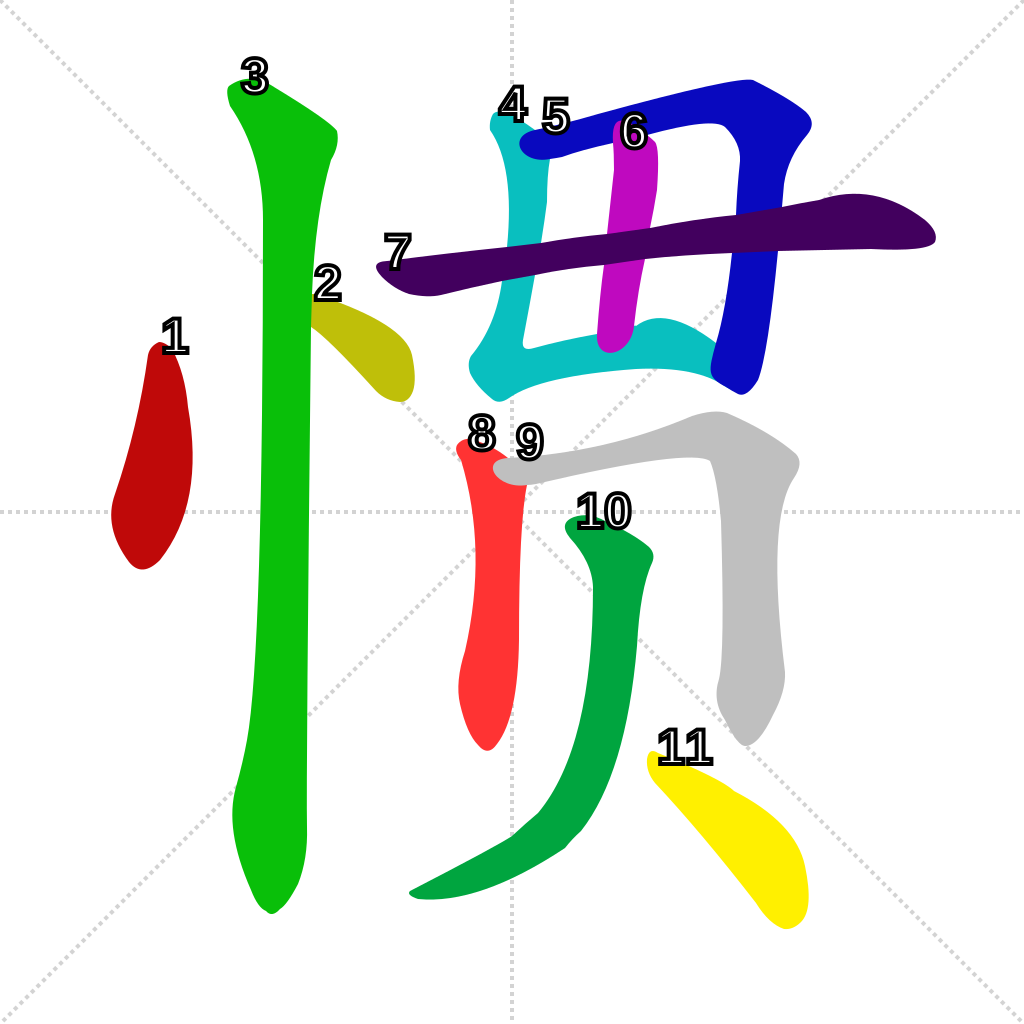
慣

Chinese-English: CC-CEDICT Dictionary CC-CEDICT CN-EN Dictionary
Japanese-Thai: Longdo Dictionary Longdo Approved JP-TH
[しゅうかん, shuukan] (n) ขนบธรรมเนียม, ประเพณี
Japanese-Thai-English: Saikam Dictionary Saikam JP-TH-EN Dictionary
慣れる
[なれる, nareru] TH: คุ้นเคย
慣性
[かんせい, kansei] TH: วัตถุที่จะไม่มีการเปลี่ยนแปลงลักษณะใด ๆ หากไม่มีอะไรมากระทบถูก
慣性
[かんせい, kansei] EN: inertia
Japanese-Thai-English: Saikam Dictionary Saikam JP-TH-EN Dictionary
慣れる
[なれる, nareru] TH: คุ้นเคย
慣性
[かんせい, kansei] TH: วัตถุที่จะไม่มีการเปลี่ยนแปลงลักษณะใด ๆ หากไม่มีอะไรมากระทบถูก
慣性
[かんせい, kansei] EN: inertia
Japanese-English: EDICT Dictionary EDICT JP-EN Dictionary
[しゅうかん, shuukan] (n, adj-no) custom; habit; manners; (P) #8477
[かんしゅう, kanshuu] (n, vs, adj-no) usual (historical) custom; (P) #8828
[かんれい, kanrei] (n, adj-no) custom; precedent; of convention; (P) #10137
[なれ, nare] (n, vs) practice; practise; experience; (P) #11310
[かんよう, kanyou] (n, vs, adj-no) common; customary #13726
[かんこう, kankou] (n, adj-no) customary practice; customary practise; habit; traditional event; (P) #18780
[しなれる, shinareru] (v1) to be used to doing; to be experienced in
[あくしゅうかん, akushuukan] (n) bad habit; evil practices; evil practises
[したならし, shitanarashi] (n) preparatory activity
[ならし;ナラシ, narashi ; narashi] (n) running-in; breaking in (e.g. engine, etc.); accustomizing
[ならす, narasu] (v5s, vt) to accustom; (P)
[なれた, nareta] (adj-f) experienced; practiced; practised; familiar
[なれっこ, narekko] (n, adj-no, adj-na) being used to ...; getting used to ...; being accustomed to; being conditioned to; be familiar with
[なれっこになる, narekkoninaru] (exp, v5r) to become used to; to become familiar with; to grow accustomed to
[なれる, nareru] (v1, vi) (1) to grow accustomed (to); to get too familiar with; to get used (to); (2) to become domesticated; to become tame; (P)
[なれしたしむ, nareshitashimu] (v5m) to become familiar with; to get used to
[かんこうとりひき, kankoutorihiki] (n) usual business practices (practises)
[かんこうはん, kankouhan] (n) (1) (See 常習犯) habitual criminal; recidivist; (2) recidivism; habitual criminal activity
[かんしゅだん, kanshudan] (n) conventional means; usual means
[かんしゅうこくさいほう, kanshuukokusaihou] (n) customary international law
[かんしゅうほう, kanshuuhou] (n) (1) common law; (2) customary law (in international law)
[かんせい, kansei] (n) inertia
[かんせいのほうそく, kanseinohousoku] (n) law of inertia
[かんせいモーメント, kansei mo-mento] (n) moment of inertia
[かんせいけい, kanseikei] (n) inertial system
[かんせいこうほう, kanseikouhou] (n) inertial navigation system
[かんせいゆうどう, kanseiyuudou] (n, adj-no) inertial guidance
[かんようあんごうシステム, kanyouangou shisutemu] (n) { comp } conventional cryptosystem
[かんようあんごうほうしき, kanyouangouhoushiki] (n) { comp } conventional cryptosystem
[かんようおん, kanyouon] (n) traditional (popularly accepted) pronunciation (e.g. of a kanji)
[かんようく, kanyouku] (n) idiomatic usage; common usage; (P)
[かんようご, kanyougo] (n) { ling } idiom
[かんようごく, kanyougoku] (n) idiom; idiomatic phrase
[かんようごほう, kanyougohou] (n) idiomatic usage
[かんようよみ, kanyouyomi] (n) reading of a word or kanji using its customary pronunciation (which is not necessarily correct)
[かんようひょうげん, kanyouhyougen] (n) idiomatic expression; idiom
[かんようほう, kanyouhou] (n) (obsc) (See 語法) usage (esp. of language)
[かんようめい, kanyoumei] (n) common name; popular name; trivial name
[かんれいてき, kanreiteki] (adj-na) typical; customary
[かんいかんようじたい, kan'ikanyoujitai] (n) (See 常用漢字) simplified form (of a kanji); any of 22 simplified non-joyo kanji variants commonly used in print
[きゅうかん, kyuukan] (n) old customs
[かたならし, katanarashi] (n, vs) warming or limbering up
[みならす, minarasu] (v5s) to get used to seeing; to be familar with
[みなれる, minareru] (v1, vi) to become used to seeing; to be familiar with; (P)
[よびなれる, yobinareru] (v1) to be used to calling (someone by a certain name)
[くちならし, kuchinarashi] (n, vs) accustoming oneself to a certain taste; oral drill
[こうばいしゅうかん, koubaishuukan] (n) buying habit
[つかいならす, tsukainarasu] (v5s) to accustom oneself to using; to train; to break in (horses)
[つかいなれる, tsukainareru] (v1) to get accustomed to using
[かいならし, kainarashi] (n) (See 飼いならす) taming; the taming of
Japanese-German: JDDICT Dictionary JDDICT JP-DE Dictionary
เพิ่มคำศัพท์

ทราบความหมายของคำศัพท์นี้? กด [เพิ่มคำศัพท์] เพื่อใส่คำนี้พร้อมความหมาย เพื่อเป็นวิทยาทานแก่ผู้ใช้ท่านอื่น ๆ
'%3e%3cpath%20d='M13.7001%2011.6957H3.30006C3.08006%2011.6957%202.90006%2011.8733%202.90006%2012.0904V12.8799C2.90006%2013.097%203.08006%2013.2746%203.30006%2013.2746H13.7001C13.9201%2013.2746%2014.1001%2013.097%2014.1001%2012.8799V12.0904C14.1001%2011.8733%2013.9201%2011.6957%2013.7001%2011.6957ZM15.3001%203.80096C14.6376%203.80096%2014.1001%204.33139%2014.1001%204.98517C14.1001%205.16034%2014.1401%205.32317%2014.2101%205.47366L12.4001%206.54438C12.0151%206.77136%2011.5176%206.64307%2011.2951%206.2582L9.25756%202.74011C9.52506%202.523%209.70006%202.19734%209.70006%201.82728C9.70006%201.17349%209.16256%200.643066%208.50006%200.643066C7.83756%200.643066%207.30006%201.17349%207.30006%201.82728C7.30006%202.19734%207.47506%202.523%207.74256%202.74011L5.70506%206.2582C5.48256%206.64307%204.98256%206.77136%204.60006%206.54438L2.79256%205.47366C2.86006%205.32563%202.90256%205.16034%202.90256%204.98517C2.90256%204.33139%202.36506%203.80096%201.70256%203.80096C1.04006%203.80096%200.500061%204.33139%200.500061%204.98517C0.500061%205.63895%201.03756%206.16938%201.70006%206.16938C1.76506%206.16938%201.83006%206.15951%201.89256%206.14965L3.70006%2010.9062H13.3001L15.1076%206.14965C15.1701%206.15951%2015.2351%206.16938%2015.3001%206.16938C15.9626%206.16938%2016.5001%205.63895%2016.5001%204.98517C16.5001%204.33139%2015.9626%203.80096%2015.3001%203.80096Z'%20fill='%23FFE713'/%3e%3c/g%3e%3cdefs%3e%3cclipPath%20id='clip0_3472_3618'%3e%3crect%20width='16'%20height='12.6316'%20fill='white'%20transform='translate(0.500061%200.643066)'/%3e%3c/clipPath%3e%3c/defs%3e%3c/svg%3e)