
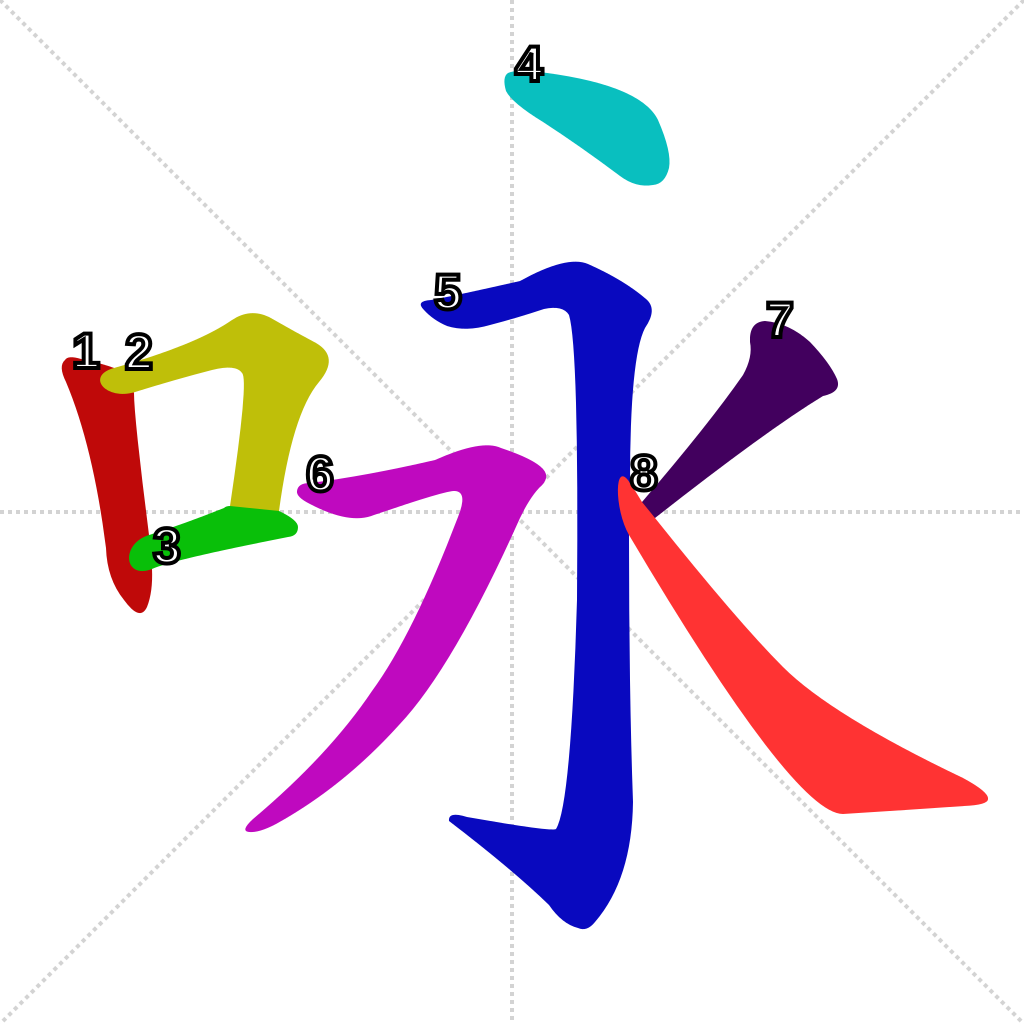
Chinese Characters: Make-Me-a-Hanzi Dictionary [with local updates] Make-Me-a-Hanzi Dictionary


Chinese-English: CC-CEDICT Dictionary CC-CEDICT CN-EN Dictionary
Japanese-Thai: Longdo Dictionary (UNAPPROVED version -- use with care ) Longdo Unapproved JP-TH **ระวัง คำแปลอาจมีข้อผิดพลาด**
詠む
[よむ] (vt) อ่าน
Japanese-English: EDICT Dictionary EDICT JP-EN Dictionary
[うたう, utau] (v5u, vt) (1) to sing; (2) to sing (one's praises in a poem, etc.); to compose a poem; to recite a poem; (P) #4857
[いえい, iei] (n) posthumous song or poem
[いっくよむ, ikkuyomu] (v5m) to make up a haiku poem
[えいじる, eijiru] (v1, vt) (See 詠ずる) to compose (e.g. poem); to recite; to sing
[えいずる, eizuru] (vz, vt) (See 詠じる) to compose (e.g. poem); to recite; to sing
[よみこむ, yomikomu] (v5m) to include in a poem (season word, place name, etc.)
[よみて, yomite] (n) writer (composer) (of a poem)
[よむ, yomu] (v5m, vt) (1) to compose (e.g. a Japanese poem); to write; (2) to recite (e.g. a poem); to chant; (P)
[えいか, eika] (n) poem; song; (Buddh.) pilgrim's song
[えいぎん, eigin] (n, vs) reciting poetry
[えいし, eishi] (n) historical poem or epic
[えいしょう, eishou] (n, vs) aria
[えいしん, eishin] (n, vs) presentation of poem (to court)
[えいそう;よみくさ, eisou ; yomikusa] (n) draft poem; draught poem
[えいたん, eitan] (n, vs) exclamation; admiration
[えいしょう, eishou] (n, vs) reciting poetry
[うたよみ, utayomi] (n) tanka composer
[かちょうふうえい, kachoufuuei] (exp) (See 花鳥風月) the beauties of nature as the key poetic theme; the central theme in composing poetry (haiku) must be the beauties of nature and the harmony that exist between nature and man. (The slogan of the Hototogisu School of modern Japanese haiku)
[きゅうえい, kyuuei] (n) ancient poems; ancient songs
[きんえい, kin'ei] (n) recent poem
[ぎんえい, gin'ei] (n, vs) recitation or chanting of a poem
[ぐうえい, guuei] (n) (hum) impromptu poem
[けんえい, ken'ei] (n, vs) poem offering
[ぎょえい, gyoei] (n) poem written by the Emperor or a member of the imperial family
[ごえいか, goeika] (n) song in praise of the Buddha
[だいえい, daiei] (n) poetry composed on a set theme
[よみびと, yomibito] (n) (poetic) author
[よみびとしらず, yomibitoshirazu] (n) (1) author unknown; anonymous; (2) unknown waka composer
[ふえい, fuei] (n) poem; writing a poem
[ろうえい, rouei] (n, vs) recitation (of Japanese or Chinese poem); (P)
[わかをよむ, wakawoyomu] (exp, v5m) to compose a waka
[ふうえい, fuuei] (n) poetic composition
Japanese-German: JDDICT Dictionary JDDICT JP-DE Dictionary
เพิ่มคำศัพท์

ทราบความหมายของคำศัพท์นี้? กด [เพิ่มคำศัพท์] เพื่อใส่คำนี้พร้อมความหมาย เพื่อเป็นวิทยาทานแก่ผู้ใช้ท่านอื่น ๆ
'%3e%3cpath%20d='M13.7001%2011.6957H3.30006C3.08006%2011.6957%202.90006%2011.8733%202.90006%2012.0904V12.8799C2.90006%2013.097%203.08006%2013.2746%203.30006%2013.2746H13.7001C13.9201%2013.2746%2014.1001%2013.097%2014.1001%2012.8799V12.0904C14.1001%2011.8733%2013.9201%2011.6957%2013.7001%2011.6957ZM15.3001%203.80096C14.6376%203.80096%2014.1001%204.33139%2014.1001%204.98517C14.1001%205.16034%2014.1401%205.32317%2014.2101%205.47366L12.4001%206.54438C12.0151%206.77136%2011.5176%206.64307%2011.2951%206.2582L9.25756%202.74011C9.52506%202.523%209.70006%202.19734%209.70006%201.82728C9.70006%201.17349%209.16256%200.643066%208.50006%200.643066C7.83756%200.643066%207.30006%201.17349%207.30006%201.82728C7.30006%202.19734%207.47506%202.523%207.74256%202.74011L5.70506%206.2582C5.48256%206.64307%204.98256%206.77136%204.60006%206.54438L2.79256%205.47366C2.86006%205.32563%202.90256%205.16034%202.90256%204.98517C2.90256%204.33139%202.36506%203.80096%201.70256%203.80096C1.04006%203.80096%200.500061%204.33139%200.500061%204.98517C0.500061%205.63895%201.03756%206.16938%201.70006%206.16938C1.76506%206.16938%201.83006%206.15951%201.89256%206.14965L3.70006%2010.9062H13.3001L15.1076%206.14965C15.1701%206.15951%2015.2351%206.16938%2015.3001%206.16938C15.9626%206.16938%2016.5001%205.63895%2016.5001%204.98517C16.5001%204.33139%2015.9626%203.80096%2015.3001%203.80096Z'%20fill='%23FFE713'/%3e%3c/g%3e%3cdefs%3e%3cclipPath%20id='clip0_3472_3618'%3e%3crect%20width='16'%20height='12.6316'%20fill='white'%20transform='translate(0.500061%200.643066)'/%3e%3c/clipPath%3e%3c/defs%3e%3c/svg%3e)