
Chinese Characters: Make-Me-a-Hanzi Dictionary [with local updates] Make-Me-a-Hanzi Dictionary


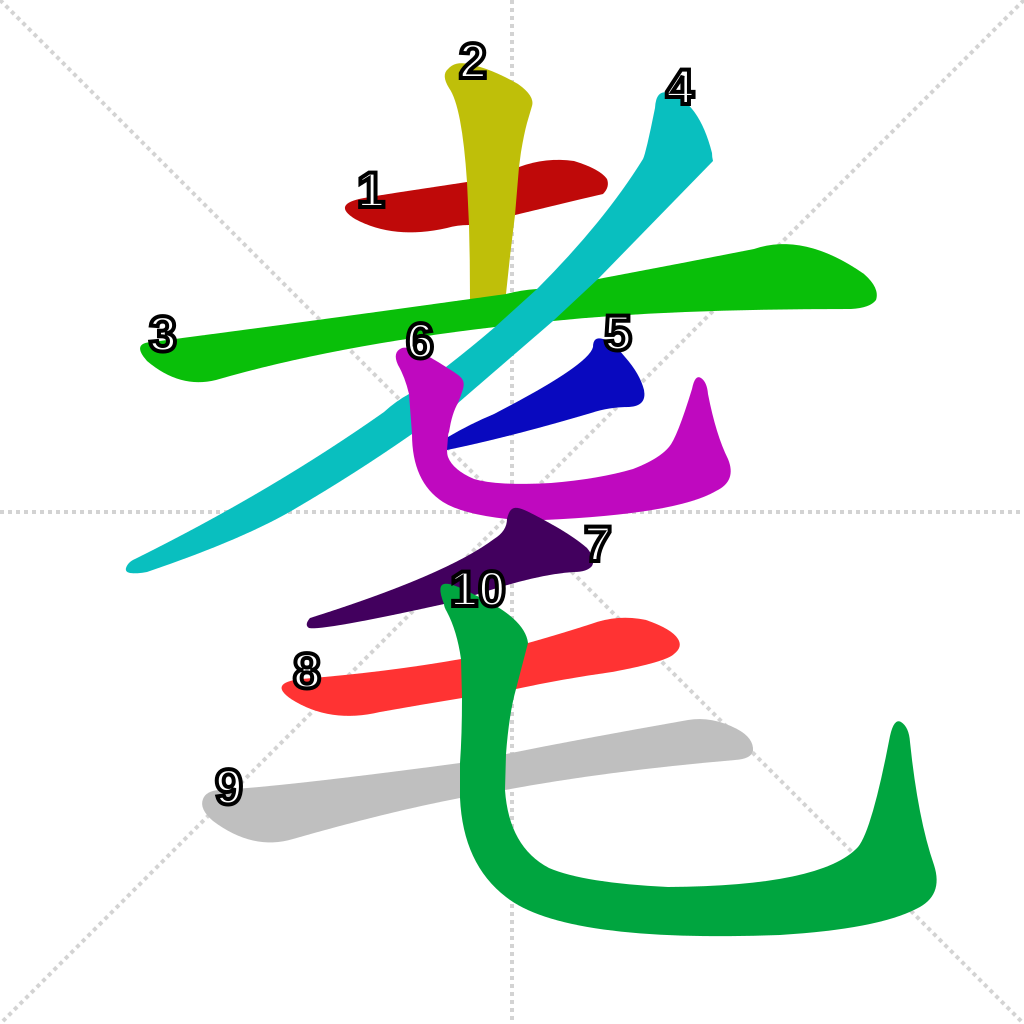


老
者
考
耋
佬
Chinese-English: CC-CEDICT Dictionary CC-CEDICT CN-EN Dictionary
[老, lǎo] prefix used before the surname of a person or a numeral indicating the order of birth of the children in a family or to indicate affection or familiarity; old (of people); venerable (person); experienced; of long standing; always; all the time; of the pas #295
Japanese-Thai: Longdo Dictionary Longdo Approved JP-TH
[えび, ebi] (n) กุ้ง
Japanese-Thai: Longdo Dictionary (UNAPPROVED version -- use with care ) Longdo Unapproved JP-TH **ระวัง คำแปลอาจมีข้อผิดพลาด**
老舗
[ろうほ] ร้านเก่าแก่(ตั้งมานาน)
Japanese-English: EDICT Dictionary EDICT JP-EN Dictionary
[ろう, rou] (n) old age; age; old people; the old; the aged #6419
[ろうじん, roujin] (n, adj-no) the aged; old person; (P) #4939
[ろうきゅう, roukyuu] (n, vs, adj-no) superannuated; decrepitude; (P) #9288
[かろう, karou] (n) chief retainer; daimyo's minister #9948
[げんろう, genrou] (n) (1) elder statesman; doyen; old-timer; authority; (2) Genro (member of a pre-WWII body that informally advised the emperor); (P) #10410
[ちょうろう, chourou] (n, adj-no) eldest; senior; (P) #10440
[ようろう, yourou] (n) (1) making provision for the elderly; (2) Yourou era (717.11.17-724.2.4); (P) #10860
[しにせ(P);ろうほ, shinise (P); rouho] (n) (1) old shop; shop of long standing; (adj-no) (2) well-established; first of the kind; veteran; (P) #11917
[えび(P);エビ(P), ebi (P); ebi (P)] (n) prawn; shrimp; lobster; crayfish; (P) #16554
[ろうじゅう;ろうぢゅう, roujuu ; roudyuu] (n) member of shogun's council of elders #17038
[おやじ(gikun);ろうや(老爺);しんぷ(親父), oyaji (gikun); rouya ( rou jii ); shinpu ( oyaji )] (n) one's father; old man; one's boss #18371
[ろうば, rouba] (n) old woman; (P) #19280
[オマールえび;オマールエビ, oma-ru ebi ; oma-ruebi] (n) (See オマール) lobster
[いせえび(伊勢海老;伊勢えび;伊勢蝦;竜蝦);いせエビ(伊勢エビ);イセエビ, iseebi ( iseebi ; ise ebi ; ise ebi ; ryuu ebi ); ise ebi ( ise ebi ); iseebi] (n) (uk) spiny lobster (esp. Japanese spiny lobster, Panulirus japonicus)
[よこえび;ヨコエビ, yokoebi ; yokoebi] (n) (uk) gammaridean amphipod (any small, shrimp-like crustacean of suborder Gammaridea)
[ぼたんえび, botan'ebi] (n) (uk) botan shrimp (Pandalus nipponensis)
[おとひめえび;オトヒメエビ, otohimeebi ; otohimeebi] (n) (uk) banded coral shrimp (Stenopus hispidus); coral banded shrimp; banded boxer shrimp
[ほや;ホヤ, hoya ; hoya] (n) (uk) sea squirt; ascidian
[えびでたいをつる, ebidetaiwotsuru] (exp, v5r) to throw in a shrimp and pull out a whale; to use a sprat to catch a mackerel
[えびチリ;エビチリ, ebi chiri ; ebichiri] (n) (uk) (abbr) (abbr. of 海老のチリソース煮) stir-fried shrimp in chili sauce
[えびフライ, ebi furai] (n) fried prawns
[えびがに;エビガニ, ebigani ; ebigani] (n) (uk) (col) (See アメリカザリガニ) crayfish (esp. red swamp crayfish, Procambarus clarkii)
[えびがらいちご;エビガライチゴ, ebigaraichigo ; ebigaraichigo] (n) (uk) Japanese wineberry (Rubus phoenicolasius Maxim.); wine raspberry; wineberry
[えびごし, ebigoshi] (n) stooped over
[えびじょう, ebijou] (n) padlock
[えびぜめ, ebizeme] (n) Japanese bondage torture (bound victim sits cross-legged with their arms tied behind them, and the rope is tightened until their ankles touch their neck)
[えびちゃ, ebicha] (n) maroon; reddish-brown
[えびお;かいろうび(海老尾), ebio ; kairoubi ( ebi o )] (n) (1) (えびお only) goldfish with a shrimp-like tail; (2) head of a shamisen or lute (bent back like a shrimp's tail)
[ほしえび, hoshiebi] (n) dried shrimp
[あまえび;アマエビ, amaebi ; amaebi] (n) (uk) (See 北国赤海老) northern shrimp (Pandalus borealis); sweet shrimp; northern pink prawn; red shrimp; Maine shrimp
[きろう, kirou] (n) old person thrown away in the mountains
[うしえび;ウシエビ, ushiebi ; ushiebi] (n) (uk) giant tiger prawn (Penaeus monodon); black tiger prawn
[けいろう, keirou] (n) respect for the aged; (P)
[けいろうのひ, keirounohi] (n) Respect-for-the-Aged Day Holiday (third Monday in September)
[けいろうかい, keiroukai] (n) meeting to show respect for the aged
[げっかろうじん, gekkaroujin] (n) (See 月下氷人) go-between; matchmaker
[げんろういん, genrouin] (n) (Roman) senate
[ころう, korou] (n) old people; seniors; elders; old-timer
[ごたいろう, gotairou] (n) (See 五奉行) Council of Five Elders (committee of daimyo formed by Toyotomi Hideyoshi to rule Japan until his son Hideyori came of age)
[こうろうか, kourouka] (n, vs) anti-aging
[さくらえび(桜海老;桜えび;桜蝦);さくらエビ(桜エビ);サクラエビ, sakuraebi ( sakura ebi ; sakura ebi ; sakura ebi ); sakura ebi ( sakura ebi ); saku] (n) sakura shrimp (Sergia lucens)
[しばえび(芝海老;芝えび);しばエビ(芝エビ);シバエビ, shibaebi ( shiba ebi ; shiba ebi ); shiba ebi ( shiba ebi ); shibaebi] (n) shiba shrimp (prawn, Metapenaeus joyneri)
[くるまえび, kurumaebi] (n) kuruma prawn (Marsupenaeus japonicus); kuruma shrimp; Japanese tiger prawn
[てながえび(手長海老;手長蝦;草蝦);てながエビ(手長エビ);テナガエビ, tenagaebi ( te chou ebi ; te chou ebi ; kusa ebi ); tenaga ebi ( te chou ebi ); ten] (n) freshwater prawn (any species in the genus Macrobrachium)
[じゅろうじん, juroujin] (n) god of longevity
[しゅくろう, shukurou] (n) old men; elders; seniors; veterans
[しょろう, shorou] (n, adj-no) past middle-aged; aging; ageing; elderly; age 40; (P)
[こエビ(小エビ);こえび(小海老;小蝦);コエビ, ko ebi ( shou ebi ); koebi ( shoukai rou ; shou ebi ); koebi] (n) (1) shrimp (infraorder Caridea); (2) small shrimp, prawn or lobster
[しょうねんおいやすくがくなりがたし, shounen'oiyasukugakunarigatashi] (exp) (arch) Youthful years pass quickly before one accomplishes much learning
[ねたきりろうじん, netakiriroujin] (n) (sens) bedridden senior citizen
Japanese-German: JDDICT Dictionary JDDICT JP-DE Dictionary
[げんろう, genrou] kaiserlicher_Berater
[けいろう, keirou] Achtung_vor_dem_Alter
[おいる, oiru] alt_werden, altern
[ふける, fukeru] alt_werden, altern
[ろうじん, roujin] alter_Mann, alte_Frau, alte_Leute
[ろうふうふ, roufuufu] altes_Ehepaar
[ろうさい, rousai] alte_Frau
[ろうば, rouba] alte_Frau
[ろうし, roushi] Laotse
[ろうこう, roukou] erfahren, erprobt, geuebt
[ろうきゅう, roukyuu] das_Altwerden, Altersschwaeche, Pensionierung
[ろうおう, rouou] alter_Mann
[ろうほ, rouho] altbekanntes_Geschaeft
[ろうほ, rouho] altbekanntes_Geschaeft
[ろうにゃく, rounyaku] alt_und_jung, Alter_und_Jugend
[ろうにゃく, rounyaku] alt_und_jung, Alter_und_Jugend
[ろうすい, rousui] Altersschwaeche
[ろうれい, rourei] hohes_Alter
[ちょうろう, chourou] Aeltester, Senior
[ようろういん, yourouin] Altenpflegeheim
เพิ่มคำศัพท์

ทราบความหมายของคำศัพท์นี้? กด [เพิ่มคำศัพท์] เพื่อใส่คำนี้พร้อมความหมาย เพื่อเป็นวิทยาทานแก่ผู้ใช้ท่านอื่น ๆ
'%3e%3cpath%20d='M13.7001%2011.6957H3.30006C3.08006%2011.6957%202.90006%2011.8733%202.90006%2012.0904V12.8799C2.90006%2013.097%203.08006%2013.2746%203.30006%2013.2746H13.7001C13.9201%2013.2746%2014.1001%2013.097%2014.1001%2012.8799V12.0904C14.1001%2011.8733%2013.9201%2011.6957%2013.7001%2011.6957ZM15.3001%203.80096C14.6376%203.80096%2014.1001%204.33139%2014.1001%204.98517C14.1001%205.16034%2014.1401%205.32317%2014.2101%205.47366L12.4001%206.54438C12.0151%206.77136%2011.5176%206.64307%2011.2951%206.2582L9.25756%202.74011C9.52506%202.523%209.70006%202.19734%209.70006%201.82728C9.70006%201.17349%209.16256%200.643066%208.50006%200.643066C7.83756%200.643066%207.30006%201.17349%207.30006%201.82728C7.30006%202.19734%207.47506%202.523%207.74256%202.74011L5.70506%206.2582C5.48256%206.64307%204.98256%206.77136%204.60006%206.54438L2.79256%205.47366C2.86006%205.32563%202.90256%205.16034%202.90256%204.98517C2.90256%204.33139%202.36506%203.80096%201.70256%203.80096C1.04006%203.80096%200.500061%204.33139%200.500061%204.98517C0.500061%205.63895%201.03756%206.16938%201.70006%206.16938C1.76506%206.16938%201.83006%206.15951%201.89256%206.14965L3.70006%2010.9062H13.3001L15.1076%206.14965C15.1701%206.15951%2015.2351%206.16938%2015.3001%206.16938C15.9626%206.16938%2016.5001%205.63895%2016.5001%204.98517C16.5001%204.33139%2015.9626%203.80096%2015.3001%203.80096Z'%20fill='%23FFE713'/%3e%3c/g%3e%3cdefs%3e%3cclipPath%20id='clip0_3472_3618'%3e%3crect%20width='16'%20height='12.6316'%20fill='white'%20transform='translate(0.500061%200.643066)'/%3e%3c/clipPath%3e%3c/defs%3e%3c/svg%3e)